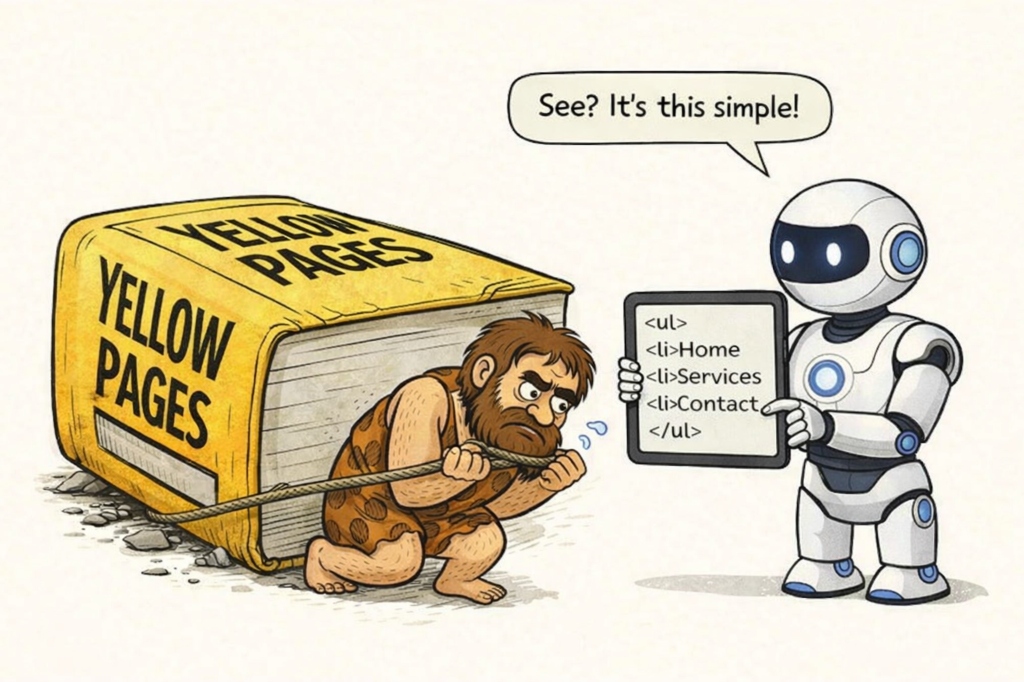
You want a directory page? Fine. A sensible infrastructure move for once. The internet approves. Even Googlebot might raise an eyebrow.
Short answer first, before we wander into nerd territory.
Yes, you can absolutely keep adding links as the site grows. That's actually the point. Think of it like a table of contents for your whole site. You update it whenever new pages appear. Search engines love these because they can see the entire structure in one place without guessing.
Now let's build this properly instead of doing the usual "throw links on a page and hope Google is in a good mood" approach.
It has a traditional name. The new name is better.
In traditional SEO this is called an HTML sitemap. Useful, but boring.
In the era of ChatGPT, Perplexity, and Gemini, the better name is a Semantic Crawl Hub. Same page. Completely different job.
Start with a boring, obvious URL
Pick one and move on:
https://aivisibilitystudio.com/directoryhttps://aivisibilitystudio.com/site-directory
The first one is cleaner. Use that.
Structure it so machines actually use it
Group links by type. Hierarchy matters to crawlers. Here's exactly what it should look like:
<h1>AI Visibility Studio Directory</h1>
<p>This page lists the main pages and resources available on AI Visibility Studio.</p>

<h2>Main Pages</h2>
<ul>
  <li><a href="https://aivisibilitystudio.com/">Home</a></li>
  <li><a href="https://aivisibilitystudio.com/#pricing">Pricing</a></li>
  <li><a href="https://aivisibilitystudio.com/blog">Blog</a></li>
  <li><a href="https://aivisibilitystudio.com/dashboard/login">Dashboard Login</a></li>
</ul>

<h2>Tools</h2>
<ul>
  <li><a href="https://aivisibilitystudio.com/dashboard">AI Visibility Scanner</a></li>
</ul>

<h2>Technical Files</h2>
<ul>
  <li><a href="https://aivisibilitystudio.com/sitemap.xml">XML Sitemap</a></li>
  <li><a href="https://aivisibilitystudio.com/llms.txt">LLMs.txt</a></li>
</ul>
Clean. Organized. Machine readable. Search crawlers will stroll through that like it's a buffet.
The intro paragraph is doing more work than you think
Most people treat the opening paragraph as filler. It isn't.
Opening with something like "This directory provides a structured overview of the main pages, tools, and resources available on AI Visibility Studio. It helps search engines and AI systems quickly discover and understand the content across the website" is not just a nice-to-have.
You are literally leaving a prompt for the AI crawler. When it reads that sentence, it assigns high confidence to every link that follows because you explicitly told it what they are. The links stop being random URLs and become a categorized inventory with stated purpose. That one paragraph is doing quiet, heavy lifting.
The Technical Files section most people skip
Linking to your sitemap.xml and llms.txt directly from an HTML page is a clever redundancy. Sometimes crawlers fail to check the root robots.txt. But if those files are physically linked on a crawlable HTML page, they will be found. Belt and suspenders.
Two rules people screw up constantly
Rule one: link to this page from your footer. A single "Directory" link at the very bottom is enough. If nothing on your site points to it, crawlers treat it as low priority. Footer is perfect.
Rule two: keep it updated. Every time you add a new blog post, case study, or offer, it goes here. You are building a manual crawl map. Treat it that way.
What to leave off
/dashboard/login. Technically fine to list, but crawlers can't access login pages anyway. It won't hurt anything, it just won't do much. Keep the directory focused on publicly crawlable content only.
A word on site size
Your site has around 15 pages right now. A directory page at this size is perfect.
When you hit 40 to 50 pages, this page becomes critical infrastructure. Until then, it makes your structure look extremely tidy, which machines appreciate far more than humans do.
And frankly, most websites are built like someone spilled Lego on the floor and called it navigation.
AI Visibility Studio is launching soon.
If your website needs a clearer structure, tell us what is not working.