 Originally published on Medium ↗
A Firm Was Building Authority on Platforms It Did Not Own. We Made Their Own Site the Source of Truth.
A professional services firm was writing well and going stale on their own domain. We built the plumbing so their site kept up on its own.
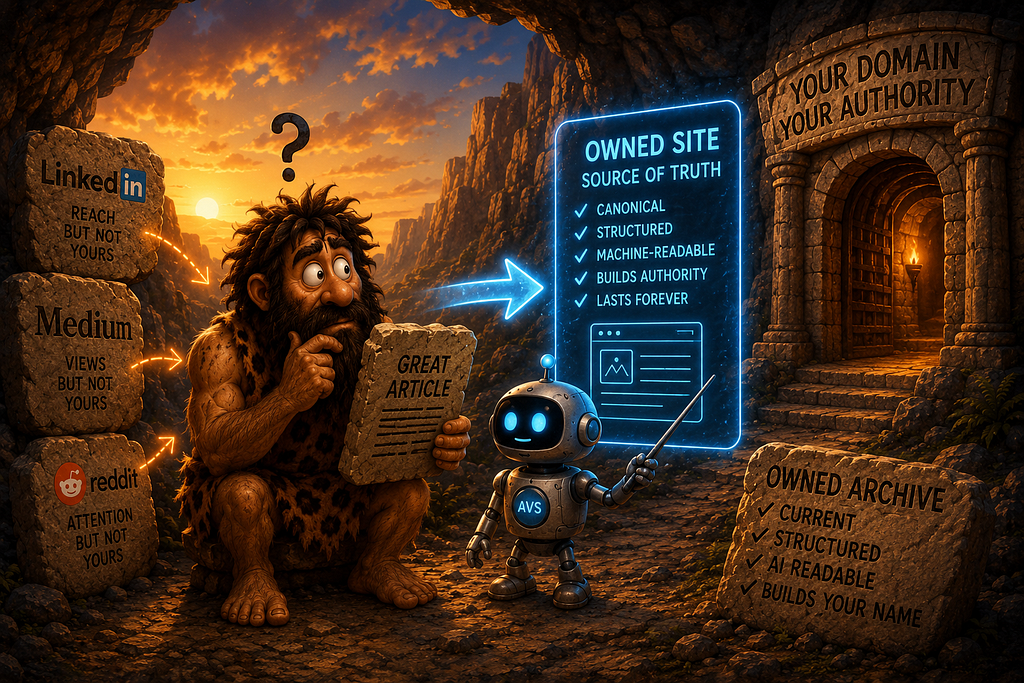
A professional services firm came to us with a quiet problem. They were publishing genuinely good articles, the kind that prove a firm knows its field, but all of it lived on third-party platforms. Their own website, the one with their name on it, sat untouched for months. The writing that should have been building their authority was building someone else’s instead.
This is more common than it sounds, and it is fixable. The fix was not more writing, and it was not abandoning the platforms either. It was a system that used those platforms as feeders while making the firm’s own site the structured source of truth underneath them.
Key Takeaways
- The firm was building authority on platforms they did not own, so their own site never gained from the writing they were already doing.
- The answer was not to abandon those platforms. Some of them are surfaces that search engines and AI systems already understand and often trust.
- We used those platforms as feeders and made the firm’s own site the structured source of truth every piece points back to.
- The work was a stack of small problems: capture, structure, schema, internal links, canonical signals, and freshness, each solved on its own.
- The result is an owned archive that stays current and is easier for search engines and AI systems to understand, with no extra effort from the firm.
Why Was Their Best Writing Helping Someone Else’s Website?
Because it lived somewhere they did not own. Publishing on a big third-party platform is a fine way to be read, and some of those platforms carry real authority that search engines and AI systems already trust. The catch is that much of the visible value can accrue to the platform’s domain, especially if your own site does not host a canonical version.
For an expert-led firm, that is backwards. The whole point of publishing is to make your own site the place a buyer, a search engine, or an AI system goes to understand what you know. If the writing never reaches your domain, your domain never gets the credit.
The firm was not doing anything wrong by publishing where they did. They were just letting the value leak outward instead of pooling it on the site they own. The cleaner approach is to keep the reach of those platforms and route the authority back home, with your own site holding the canonical, fully-structured version.
Why Do Expert Websites Go Stale in the First Place?
Because keeping two places current is a tax nobody wants to pay. You write the article once, then you are supposed to reformat it, add the structure, paste it into your own site, fix the links, and update the archive. Almost nobody does that second part for long.
So the site that matters most, the owned one, becomes the one that rots. The blog page shows a most-recent post from eight months ago. The structure underneath it was never really there. To a person it looks neglected, and to a search engine or AI system it offers few signals that the site is current or worth pulling from.
The firm had fallen into exactly this pattern. Not from laziness, but because the second half of the job was friction with no reward attached.
How Do You Fix It Without Asking Someone to Write More?
You remove the second half of the job entirely. The firm already had the habit of writing. The problem was everything that was supposed to happen after they hit publish, so that is the part we built.
We did not think of it as “republish their blog.” That framing hides the actual work. We pulled the problem apart into the pieces it was really made of, and solved each one on its own.
The exact setup depends on the site. For websites we build, the publishing system is part of the architecture from the start. For firms already using an existing website platform, the work is more about knowing what structure has to go in, what the platform can support, and how to make the content clearer to buyers, search engines, and AI systems without turning publishing into another weekly chore.
Either way, the underlying pieces are the same:
Where the writing lives and how it leaves there. The firm keeps writing where they already write. Nothing about their habit changes.
How it reaches the authority surfaces. The same piece can go out to the third-party platforms that search engines and AI systems already understand and often trust, so the reach and the external signals still happen.
How it arrives on the owned site. When they publish, the same article lands on their own domain through a publishing system, so the firm never reformats, rebuilds, or pastes anything, and the owned version is set up as the canonical source.
What structure it carries on arrival. The owned version lands with proper headings, canonical signals, internal linking, and machine-readable structure, so a search engine or an AI system can more easily understand what the page is, who published it, and what it answers.
How the archive stays alive. Each new piece updates the blog index, the internal links, and the freshness signals, so the owned site reads as active rather than abandoned.
None of those pieces is complicated on its own. The skill is seeing that the job is five small problems wearing one big coat, and building each layer so the firm never has to think about any of them.
What Changed for the Firm Once It Was Running?
They write once, in the place they already liked writing, and their own website keeps up on its own. The blog page is current. The structure is there. The archive grows on the domain they own instead of the one they rent.
The system did not replace the platforms. It made them part of the firm’s authority loop, with the owned site sitting underneath as the structured source of truth.
The part that matters for AI visibility is quieter but bigger. Because each article arrives structured and machine-readable, their own site becomes easier for search engines and AI systems to understand, retrieve, and potentially cite, instead of looking like a neglected archive. The authority finally pools where the firm’s name is.
They did not have to learn any of the technical layer, and they did not have to change how they work. The system holds the complexity so they do not have to.
Frequently Asked Questions
Q: Why is publishing only on third-party platforms bad for my own website?
A: Because much of the visible value from your writing can accrue to the platform’s domain, especially if your own site does not host a canonical version. Your own site stays stale, which makes it weaker to buyers, search engines, and AI systems, which have clearer signals when a site is current, structured, and well maintained.
Q: How do you keep a website’s blog current without extra work?
A: By building a system that takes each article you publish and places it on your own site automatically, with the right structure already applied. You keep writing as normal, and the technical and formatting work happens without you touching it.
Q: What does it mean for content to be machine-readable or citable by AI?
A: It means the page uses clear headings, structured data, and publishing signals, so search engines and AI systems can understand what the content is about and potentially reuse it in an answer. Unstructured or stale pages give systems fewer clear signals to work with.
Q: Does this mean I should stop publishing on big platforms?
A: No. Those platforms often carry authority that search engines and AI systems already trust, so they are worth using for reach. The point is to keep publishing there while making your own site the canonical, structured version that everything points back to.
Q: Is this just automatic reposting?
A: No. Automatic reposting copies text from one place to another. This wraps each piece in its own presentation on arrival, adding canonical signals, internal linking, and machine-readable structure, so the owned site gains real structure and clearer signals for search engines and AI systems rather than just gaining a duplicate.
The firm thought they had a writing problem. They did not. They had a plumbing problem, and once the plumbing was built, the writing they were already doing finally started landing where it counted.
AI Visibility Studio builds systems that turn the content you already produce into a structured, maintained knowledge base on the site you own, making it easier for search engines and AI systems to understand and use. aivisibilitystudio.com