Everyone says I need AI. Can someone start at the bloody beginning?
You ask what AI could do for your business. Someone tells you to optimise your workflows, improve your prompts and prepare for generative discovery....
Read article →The studio journal
What’s changing in websites, search and AI. What we test, what we find and what’s worth doing about it.
Fresh thinking. Same caveman.
New to all this? Start with the beginner guides →

You ask what AI could do for your business. Someone tells you to optimise your workflows, improve your prompts and prepare for generative discovery....
Read article →
A post doing the rounds this week calls ChatGPT plugins the biggest free distribution channel of 2026. For a software startup, that may turn out to be true....
Read article →
YouTube appears in roughly one-third of cited Google AI Overviews answers in LLM Pulse’s current data. In ChatGPT, the picture looks completely different.
Read article →
In August 2025 we wrote that Lovable sites were hard for Google and AI tools to read, because their pages were built in the visitor’s browser. On May 13,...
Read article →
AI visibility is not something you add to a website. It is what is left over after hundreds of small technical decisions.
Read article →
An AI visibility audit that runs a prompt once and screenshots the answer has measured nothing. AI answers change from run to run, so one missing citation on...
Read article →
AI tools can request your pages and cite your content while your analytics records no AI referral visits. Understanding that apparent gap starts with what...
Read article →
You’ve just come back from a walk. Your dog ate less than usual this morning. There’s a medication to remember tonight, and somewhere on your phone is a...
Read article →
You know the conversation you have with a potential customer before they become a customer?
Read article →
You changed the price. You fixed the wrong date. The editor shows the new version, the page loads fine, and you moved on.
Read article →
I wrote a book for business owners who want clearer answers, not another marketing acronym.
Read article →
Check HTTP headers and robots directives that affect indexing and snippets, and compare the server response with what the visible page shows.
Read article →
Your browser can display content that was missing from the HTML your server first sent. JavaScript may add the pricing table, populate the FAQ, or load a...
Read article →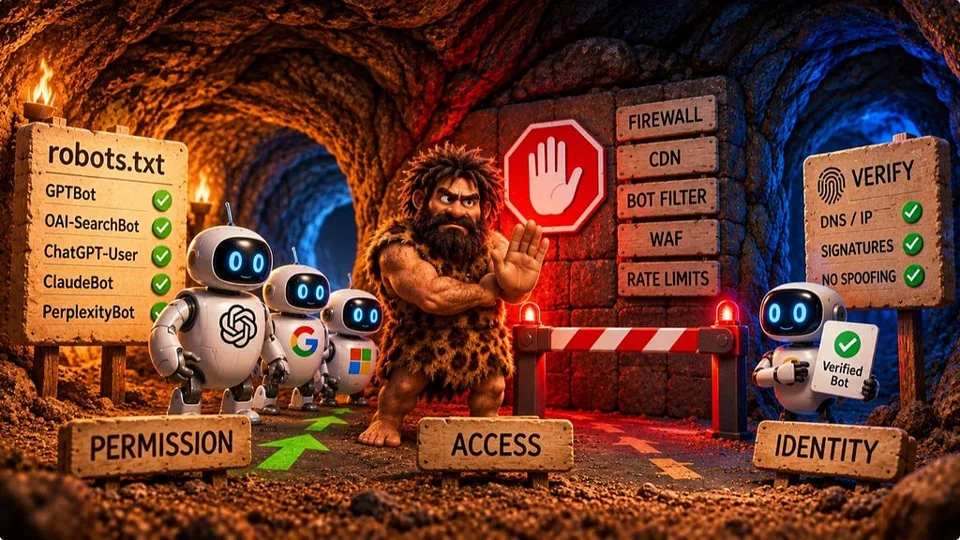
A growing number of websites have done the responsible thing: opened robots.txt to the AI crawlers they want, checked the syntax, and moved on. Some of those...
Read article →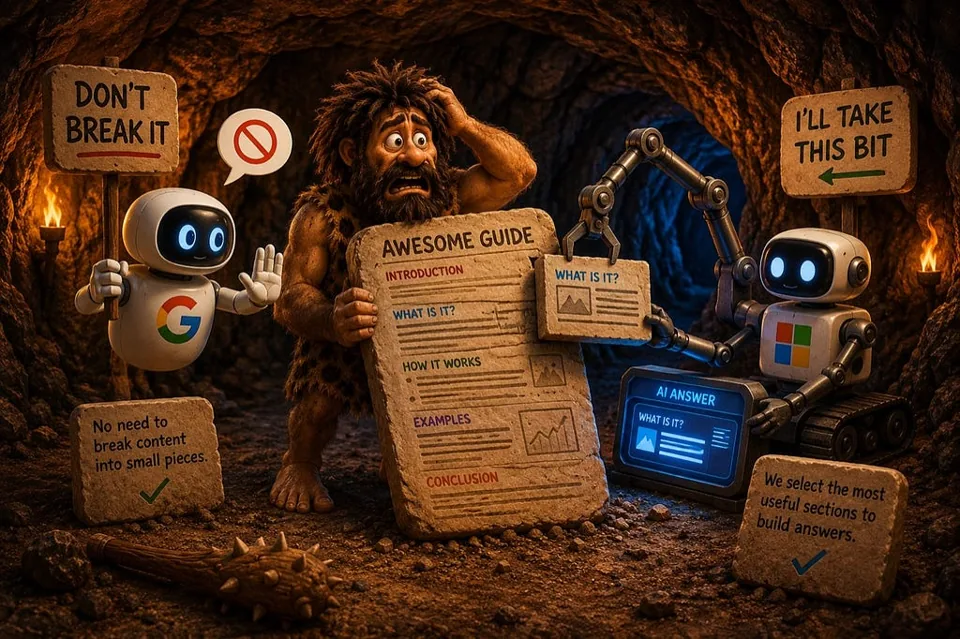
One of the articles that brings us the most readers argues that the opening of a page, roughly the first 30%, does the heavy lifting in whether AI systems...
Read article →
What Codex subagents are, how the lead agent coordinates them, what you can inspect and control, and why using them well looks more like management than...
Read article →
From May 1 to May 28, 2026, GA4 recorded zero organic-search sessions for a small service website. Not low. Zero across the measured 28-day period.
Read article →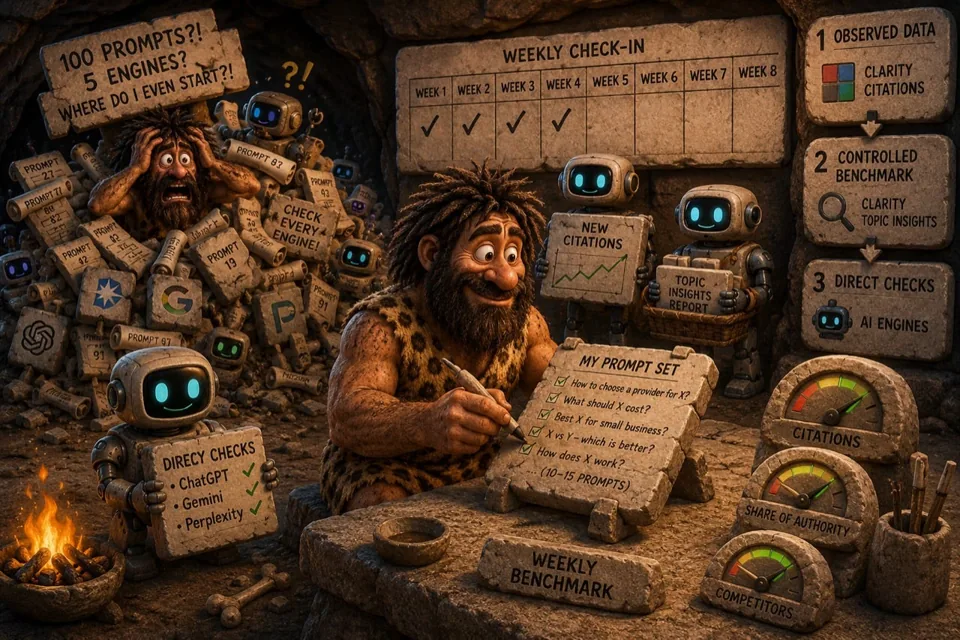
Most attempts to measure AI visibility die of ambition. People try to track every prompt, every engine, and every competitor, produce a spreadsheet nobody...
Read article →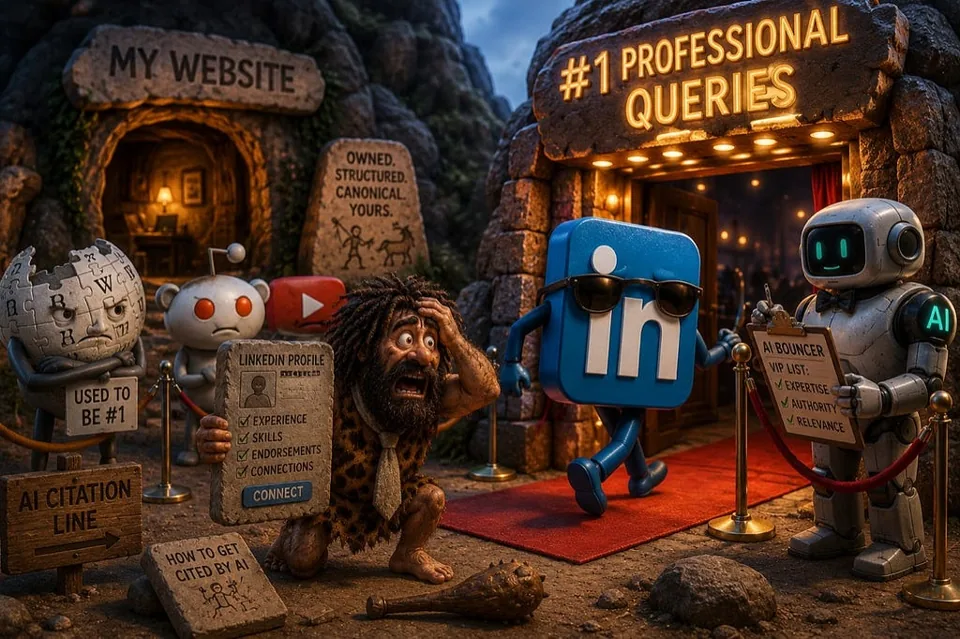
Two research releases from the same firm, four months apart, tell a more interesting story together than either does alone. In March 2026, Profound reported...
Read article →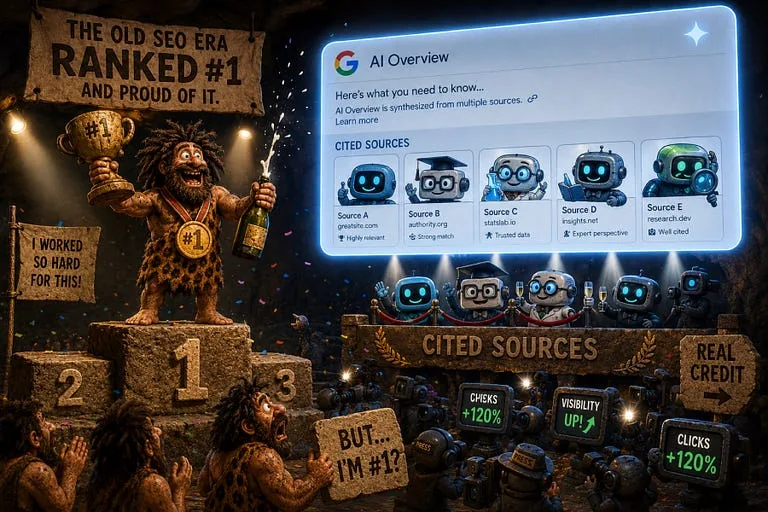
For twenty years the goal of SEO was a number: position one. That number still pays, but on a growing share of searches it no longer collects the whole...
Read article →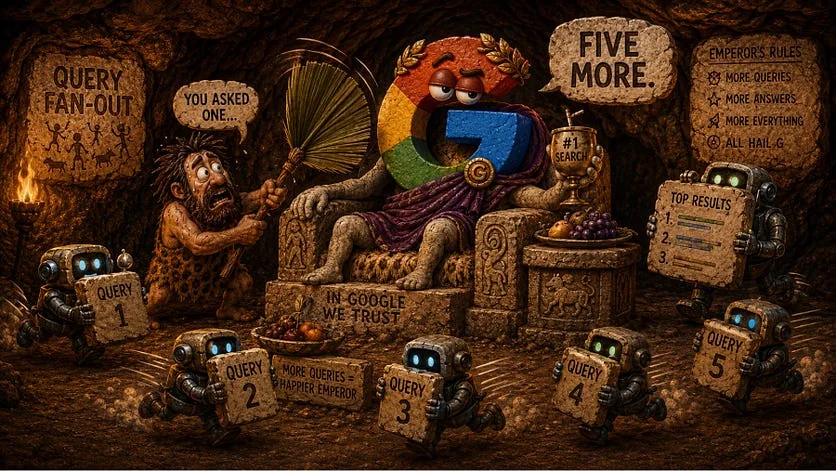
When someone types a question into some AI search systems, the system may not run only that one search. It can quietly generate several related searches, run...
Read article →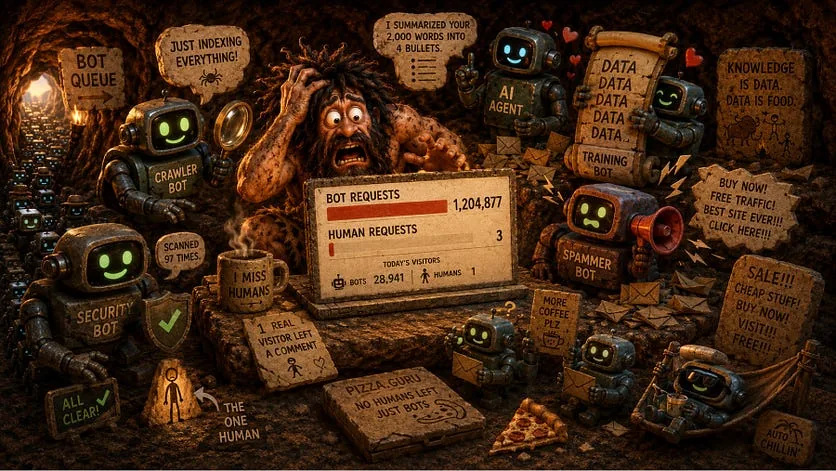
Cloudflare’s June 2026 data shows bots overtaking humans in HTTP requests to HTML content. Requests are not visitors, but the shift still matters.
Read article →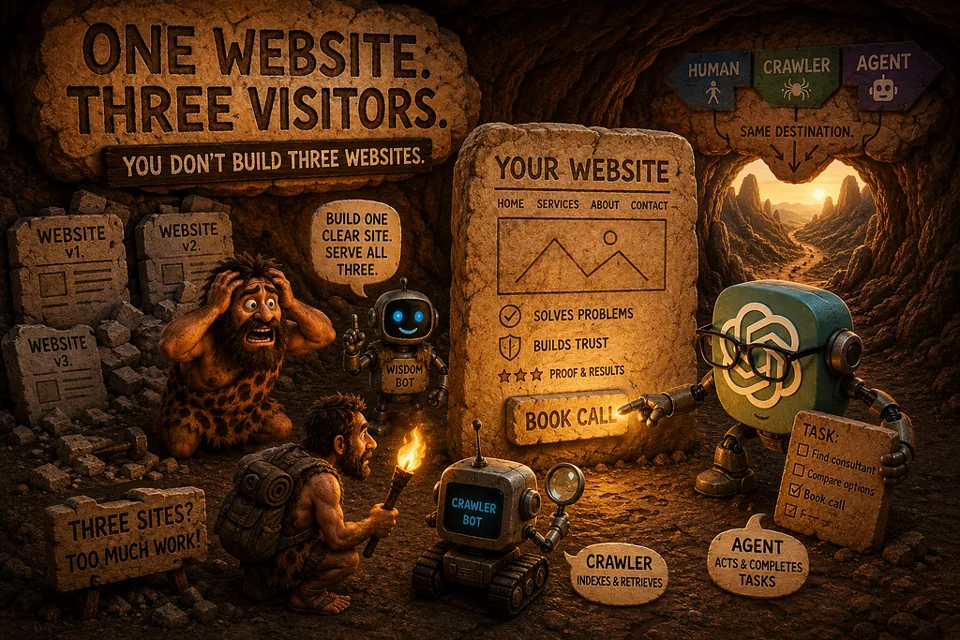
Three audiences, one site. Clean structure, honest labels, one page meaning one thing serves all of them.
Read article →
Some red marks are must-fixes. Some are theatre. Here is how to tell the difference before you ship anything.
Read article →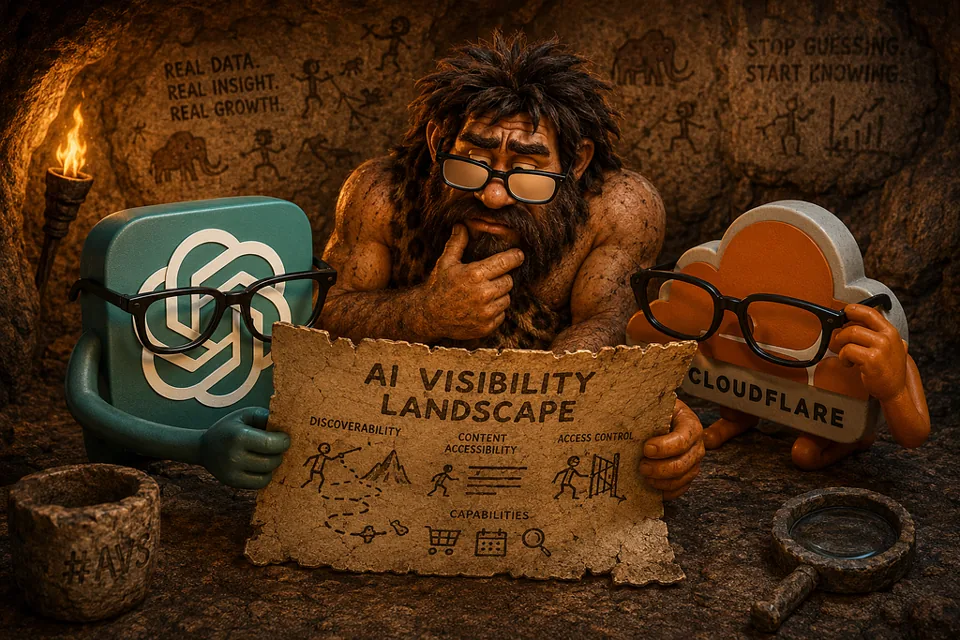
AI-ready website content helps agents understand services, follow clear paths and take supported actions. See what a website needs beyond readable copy.
Read article →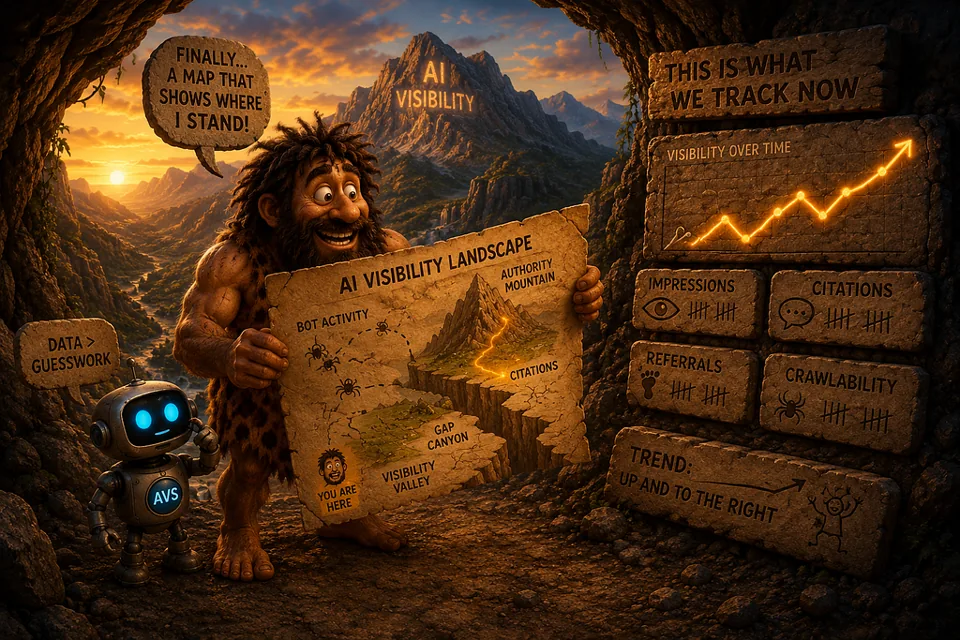
A sitemap gets a crawler to your front door. Whether it stays and cites you is a different question.
Read article →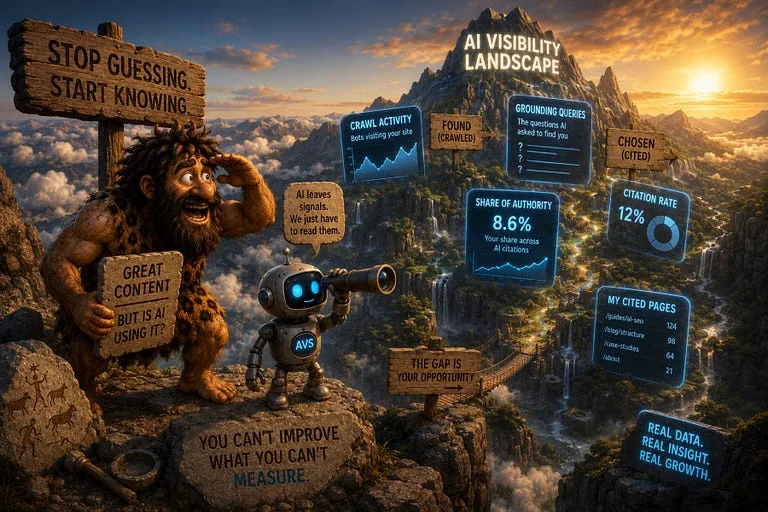
For two years the honest answer to “is AI actually reading my site” was a shrug. Microsoft Clarity changed that. Its AI Visibility section, free and now...
Read article →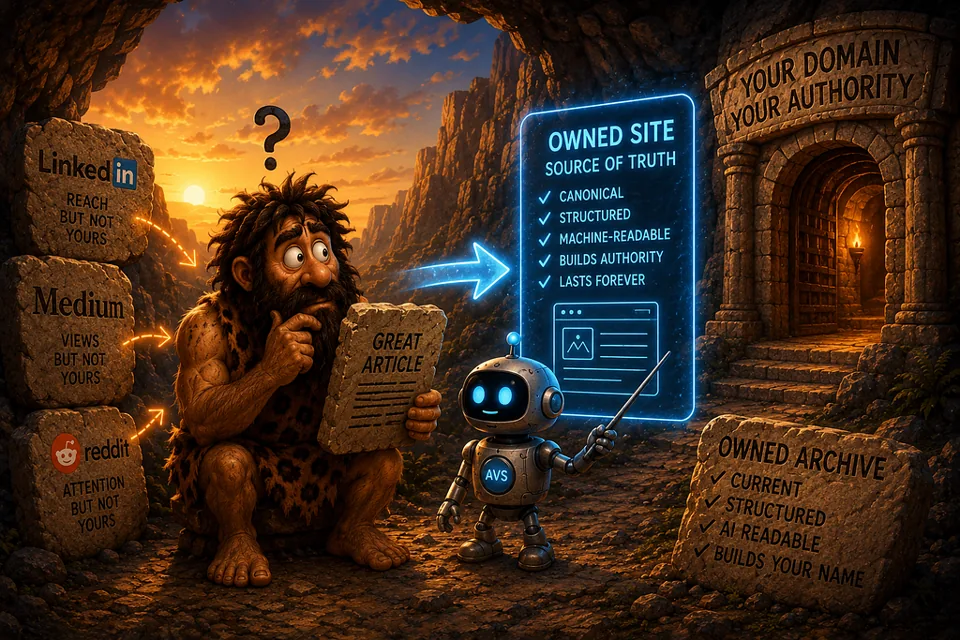
A professional services firm came to us with a quiet problem. They were publishing genuinely good articles, the kind that prove a firm knows its field, but...
Read article →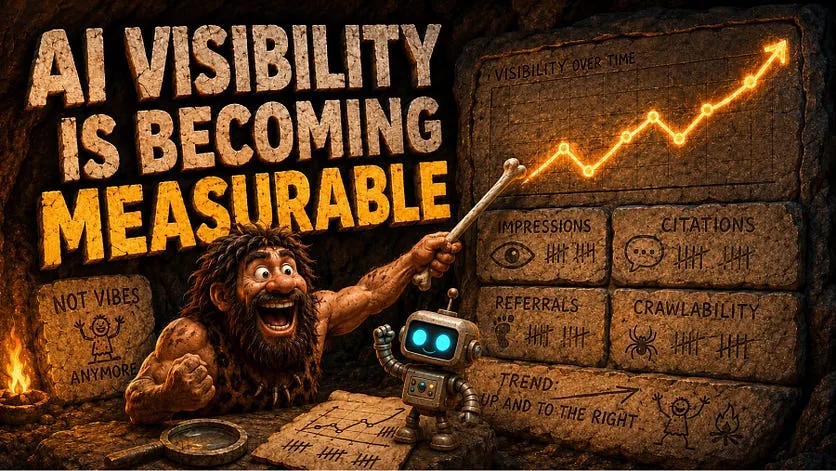
Track AI visibility with practical weekly metrics for citations, branded demand, search performance, referral activity and the business outcomes that matter.
Read article →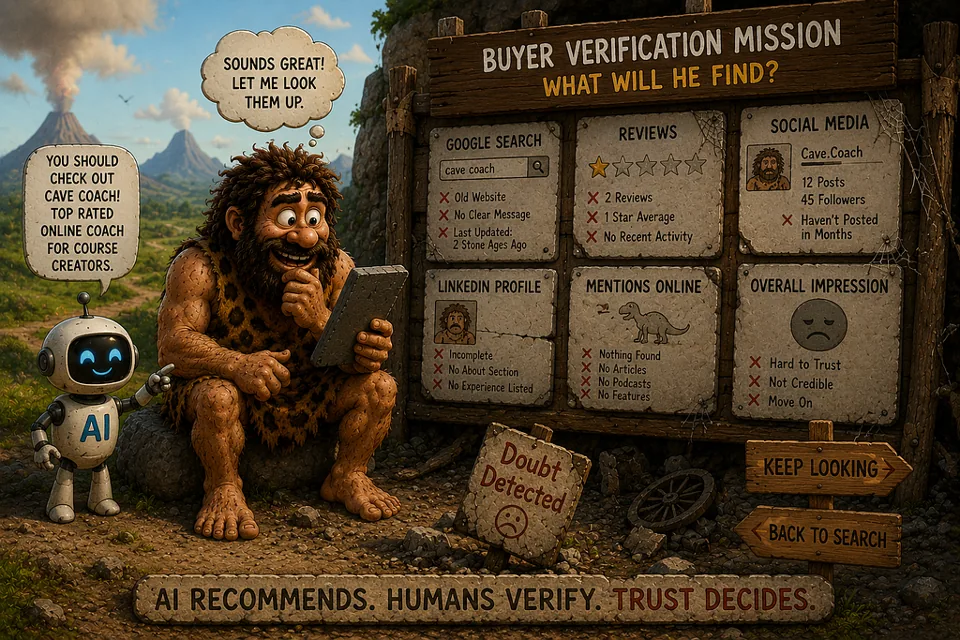
Here is the part of AI search nobody optimizes for. A buyer asks ChatGPT for a recommendation, your name comes up, and then they do not buy. They open a new...
Read article →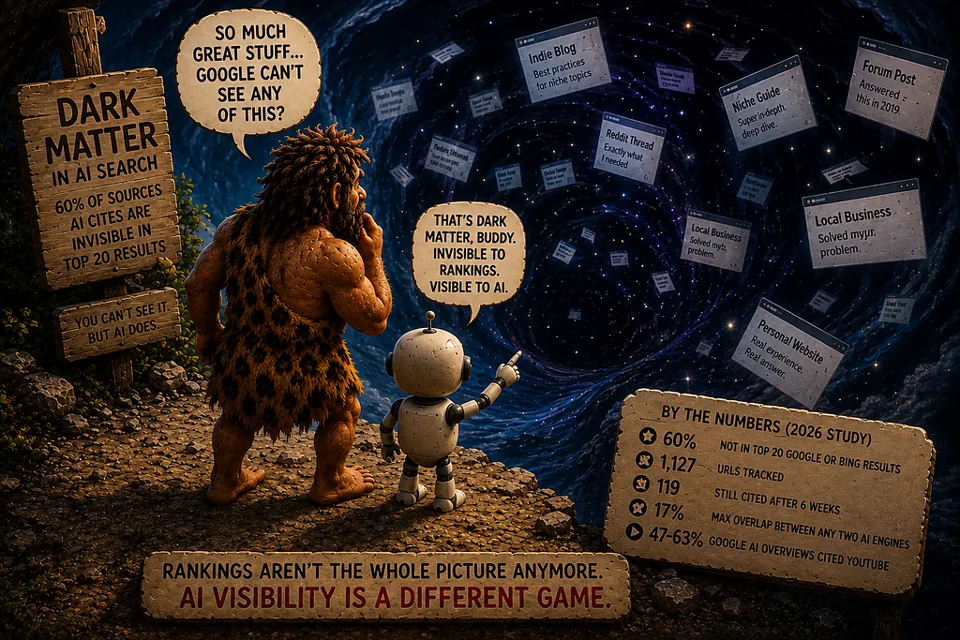
Here is something that breaks the usual advice. When ChatGPT or Google’s AI names a source, most of the time that source is not ranking anywhere near the top...
Read article →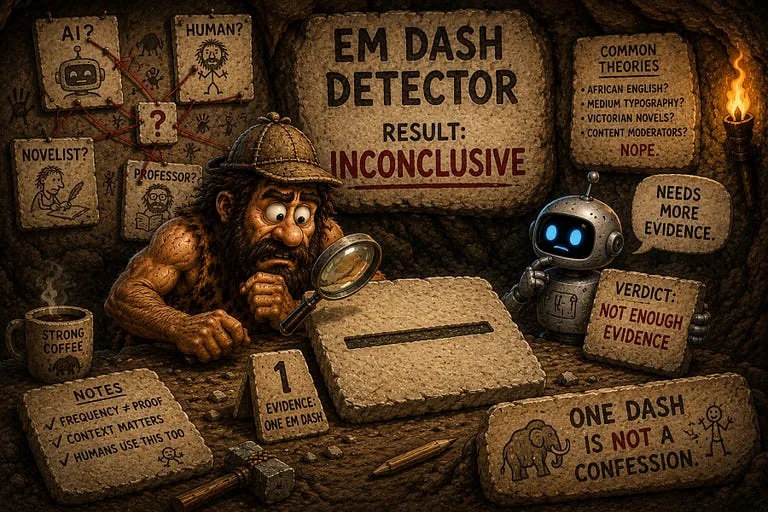
An em dash is not proof that AI wrote a piece of content. Learn why punctuation is a weak detection signal and what useful editorial review looks like.
Read article →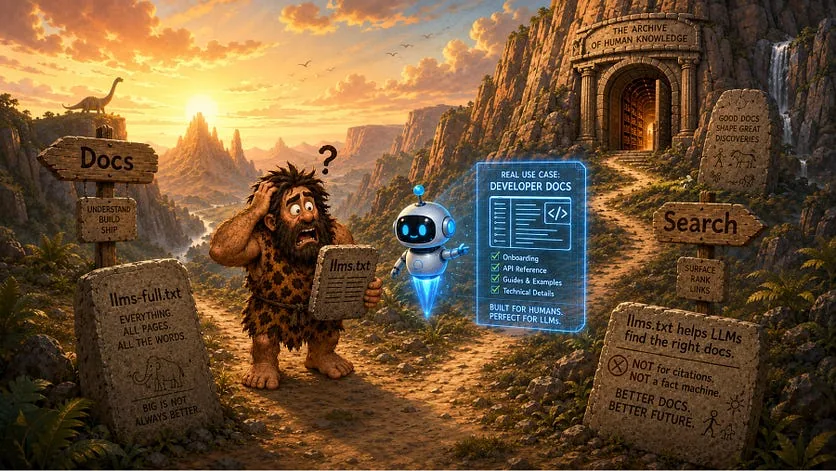
A few weeks ago I wrote that llms.txt is mostly a waste of time. The crawler logs backed me up, the studies backed me up, and Google said on the record it...
Read article →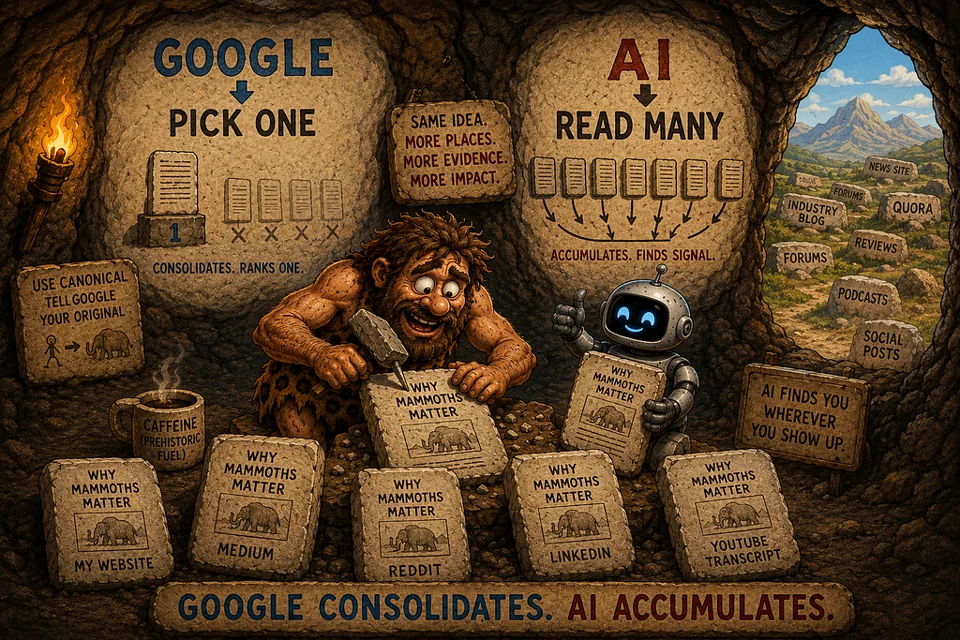
Does duplicate content hurt SEO? Learn how Google consolidates repeated pages, when canonical tags matter and why AI search treats distribution differently.
Read article →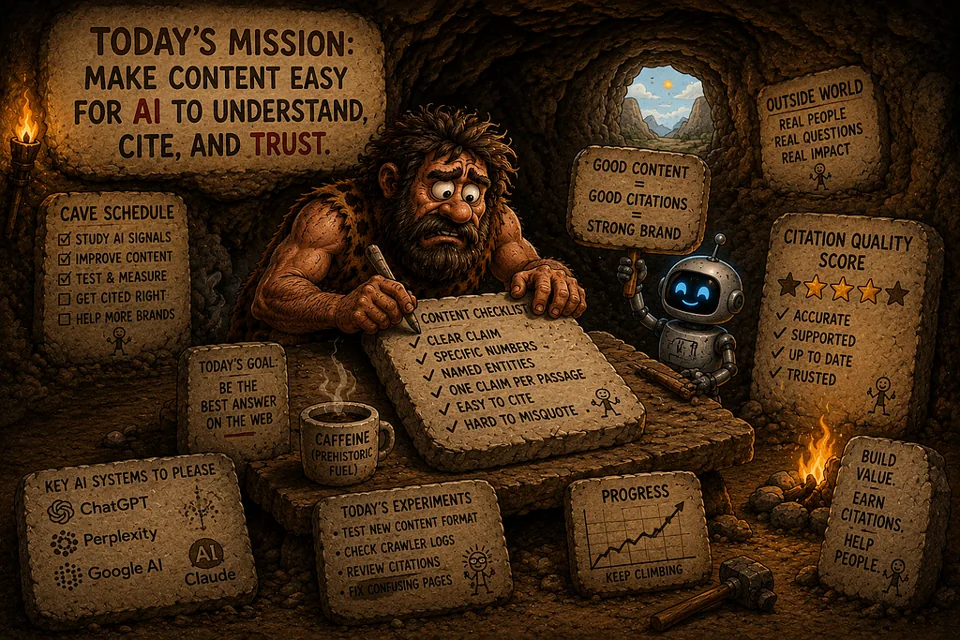
Getting cited by AI feels like the win. It is only half of one. When an AI links your page as a source, there is a real chance the claim it attached to your...
Read article →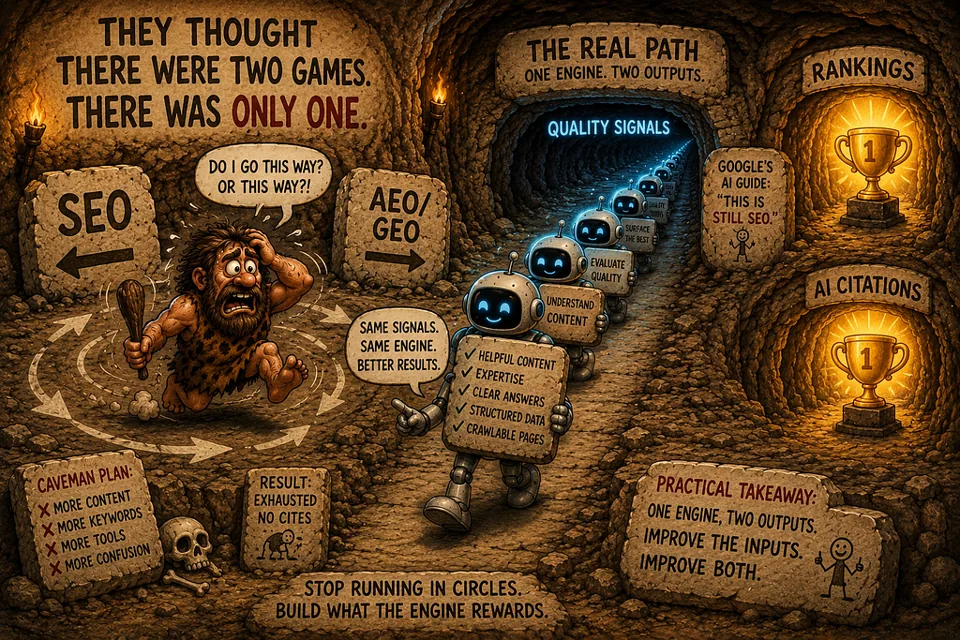
On May 21, 2026, Google started rolling out a core update. Two days earlier, at Google I/O, it announced that AI Mode had passed one billion monthly users...
Read article →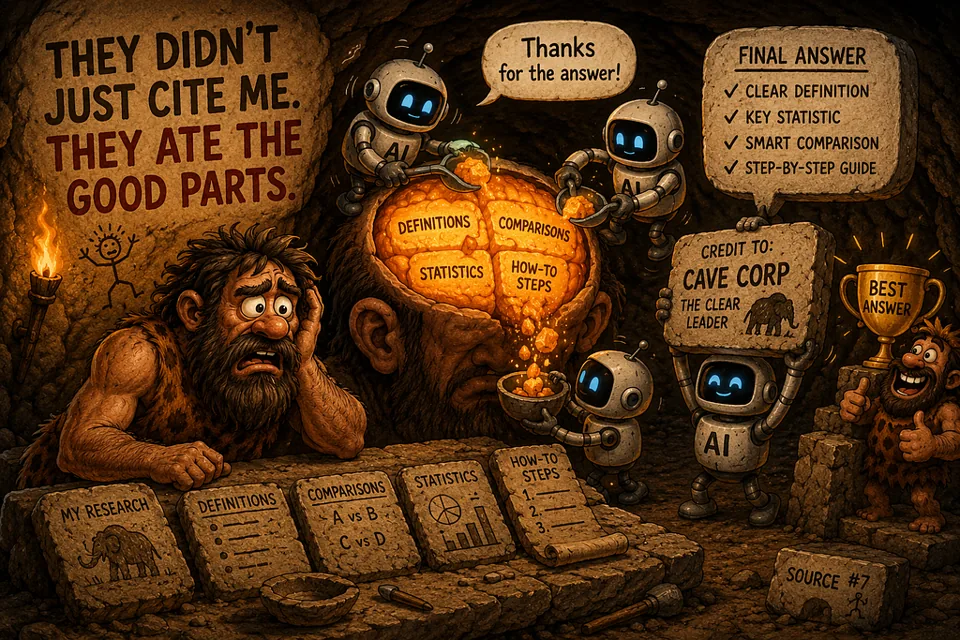
You can be cited by ChatGPT and still contribute almost nothing to the answer. The link sits at the bottom of the response, the user never clicks it, and...
Read article →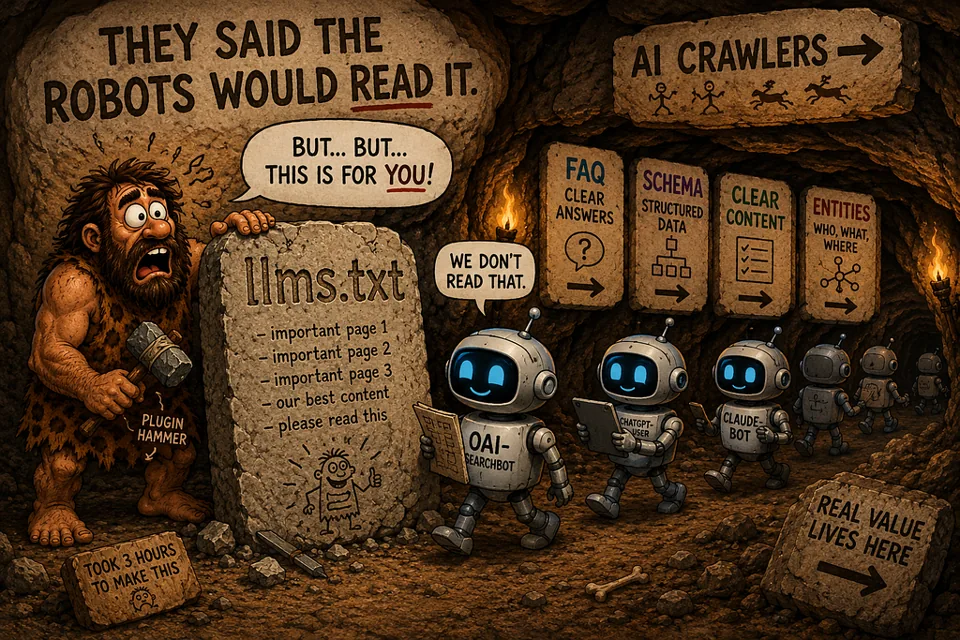
llms.txt may be the most confidently recommended AI visibility tactic with the least evidence behind it. A plugin will generate one for you. A dozen guides...
Read article →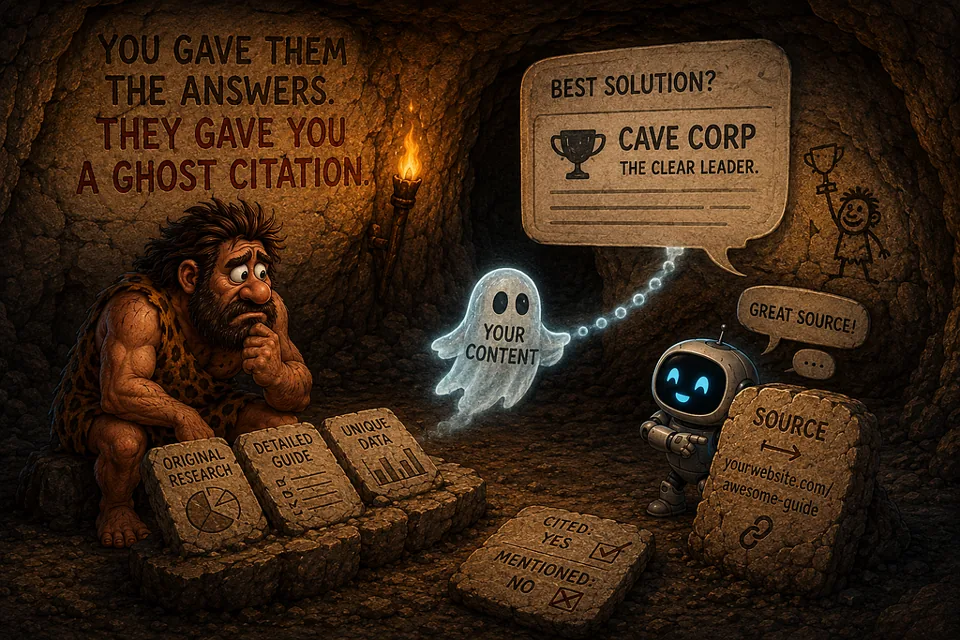
Your content gets cited by AI but your brand never appears in the answer. Here’s what a ghost citation is, why it happens, and what to do about it.
Read article →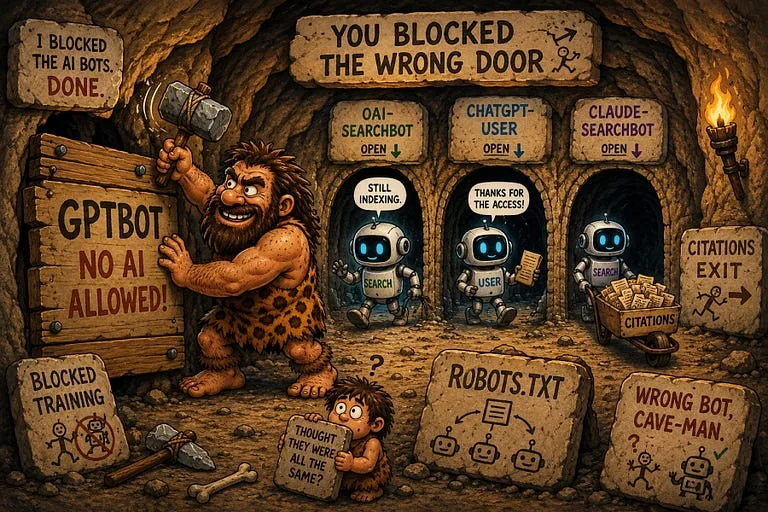
OpenAI runs three separate crawlers. Anthropic runs three more. Each one does a different job, accepts different instructions, and produces a different...
Read article →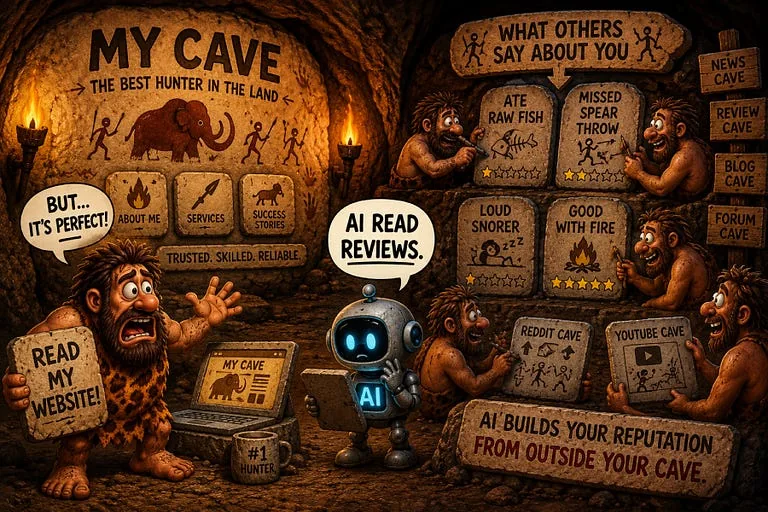
Most people assume that if they clean up their website, add schema, and write better copy, AI will start recommending them. That is part of the story. But...
Read article →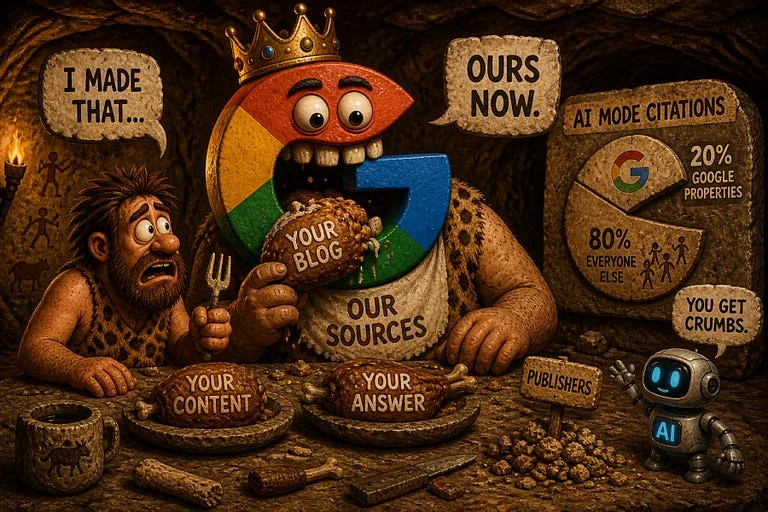
Google.com is now the single most cited domain in AI Mode. Including YouTube, Google-controlled properties account for roughly 20% of all AI Mode citations....
Read article →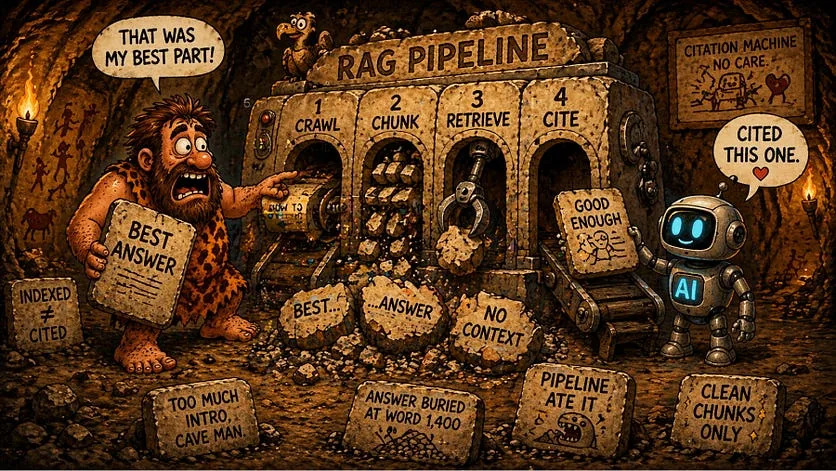
Your page is indexed. Your content is accurate. Your answer is better than the one ChatGPT gave.
Read article →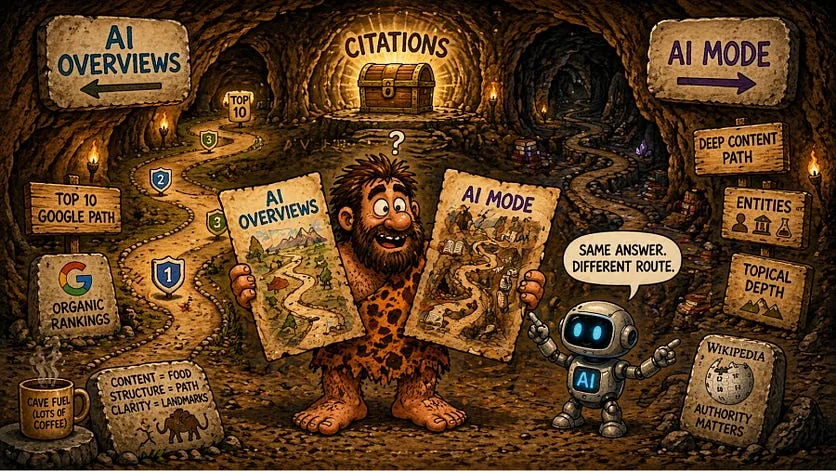
AI Mode and AI Overviews are both Google products. They can answer the same queries. In Ahrefs’ dataset, they often reached semantically similar conclusions.
Read article →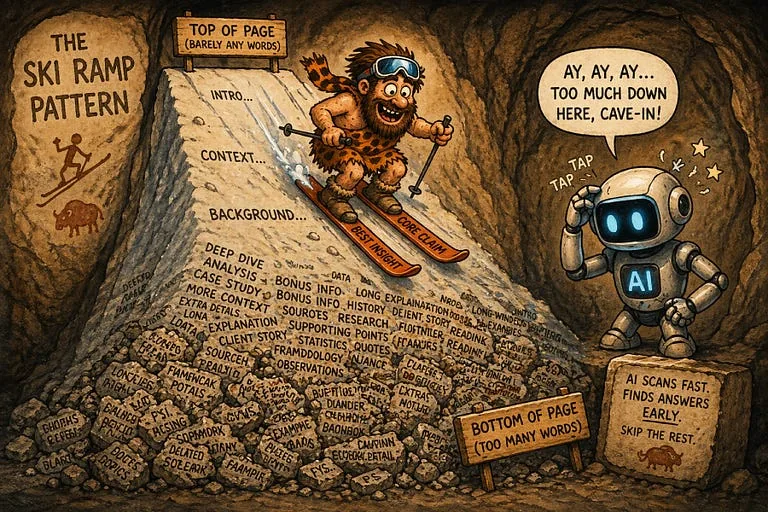
Put clear answers early without treating the first 30% of a page as an AI citation rule. A corrected guide to useful article structure.
Read article →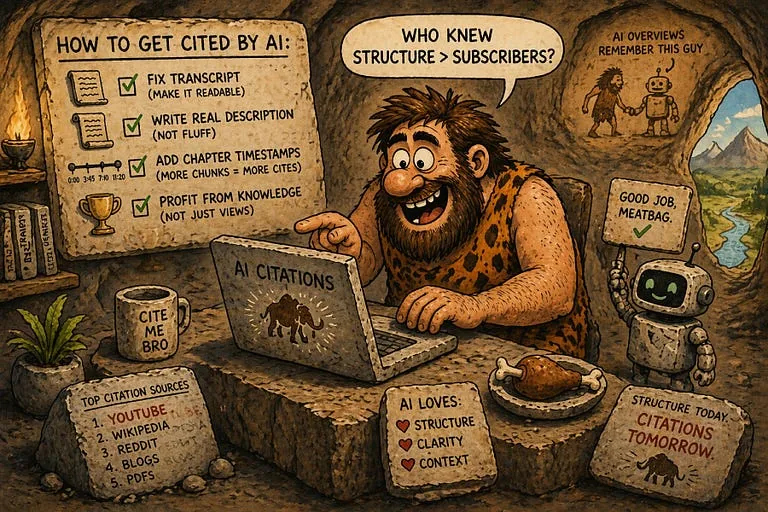
Most sites that have structured data have the same thing: a name, a URL, a logo, maybe a sameAs link to LinkedIn. AI systems read it and learn that your...
Read article →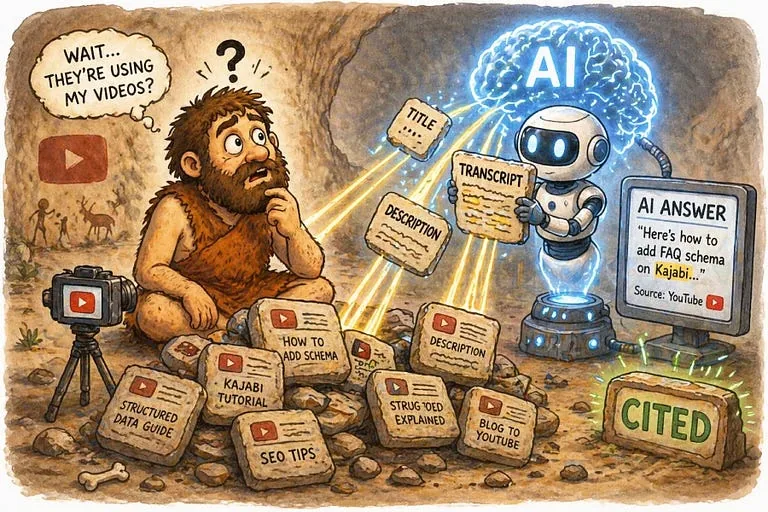
YouTube is being cited by AI systems millions of times a year. Most of the creators behind those videos have no idea it is happening.
Read article →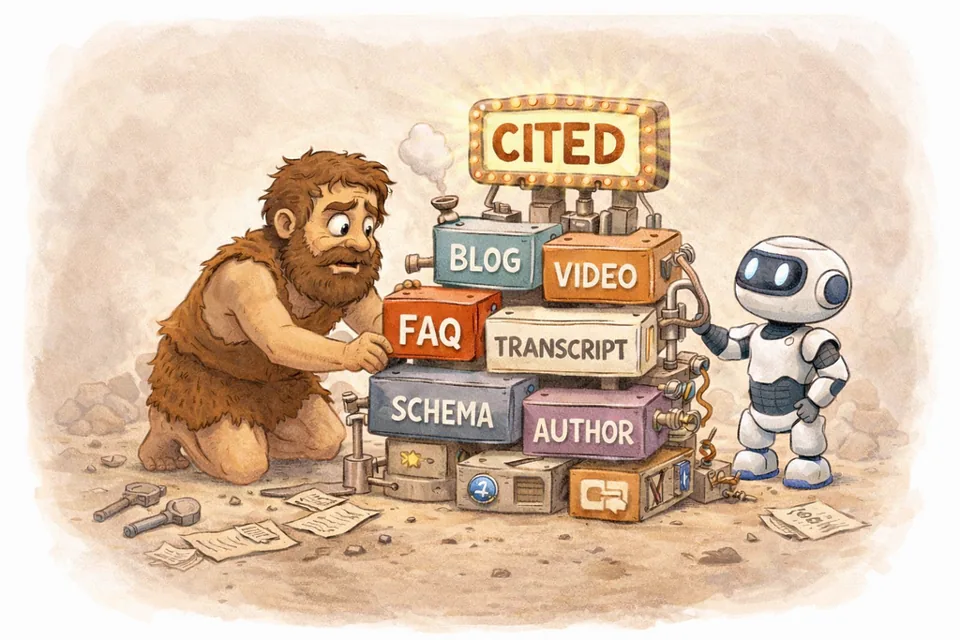
Six months ago, a B2B client asked one question: why are our competitors getting cited by AI and we’re not?
Read article →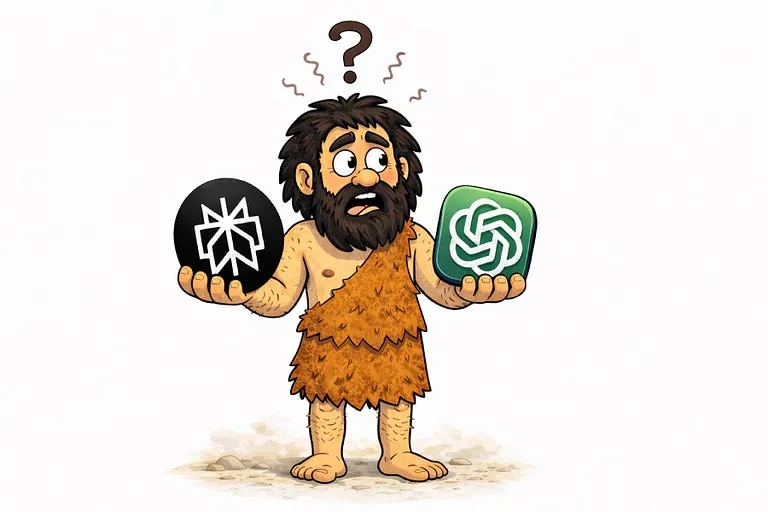
Perplexity and ChatGPT are not two versions of the same thing. They pull from different sources, reward different signals, and cite content for completely...
Read article →
Being ignored by AI is one problem. Being misquoted is a different one, and in some ways it’s worse.
Read article →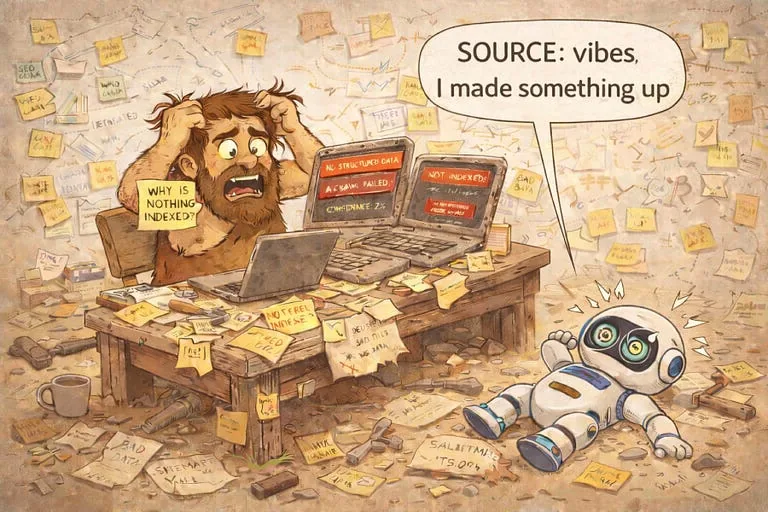
Everyone has a friend who tried AI once, got a wrong answer, and declared the whole thing useless.
Read article →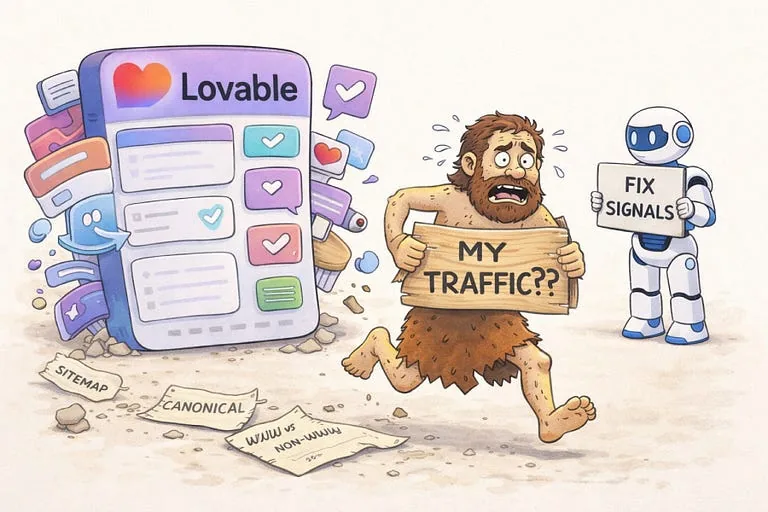
A client migrated their site off Lovable to Firebase Hosting. Within weeks, organic traffic dropped to near zero. Google Search Console showed 3 pages...
Read article →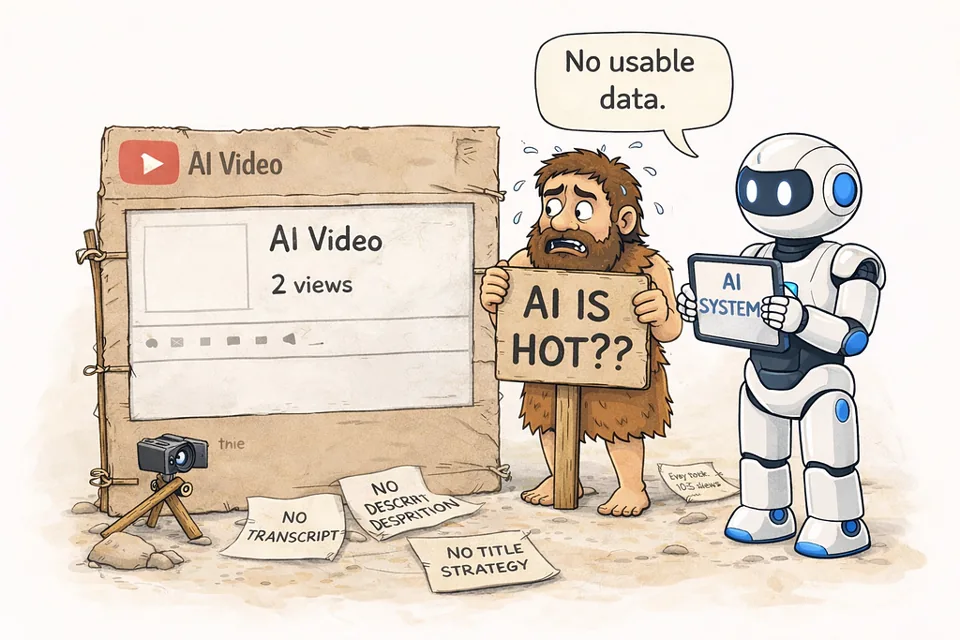
YouTube is now the most-cited domain in Google AI Overviews. Not occasionally. Consistently, across platforms, and pulling further ahead every month.
Read article →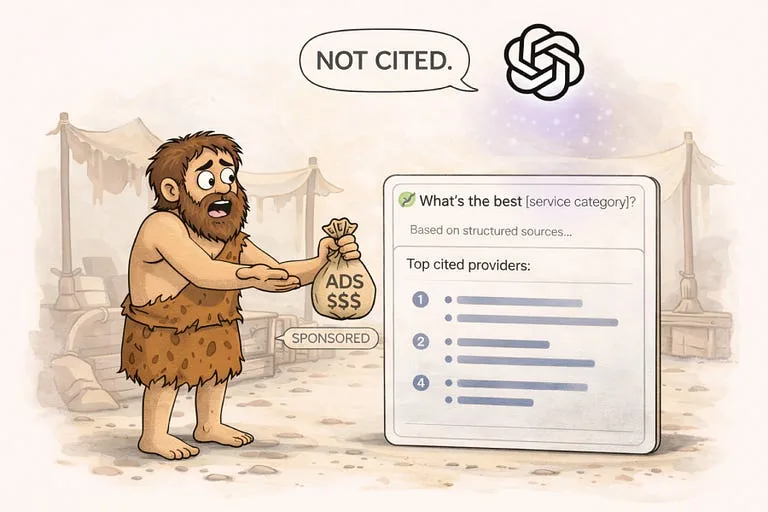
OpenAI has said it is testing ads in ChatGPT in the U.S. for logged-in adults on Free and Go plans. Sponsored placements appear when a user is already asking...
Read article →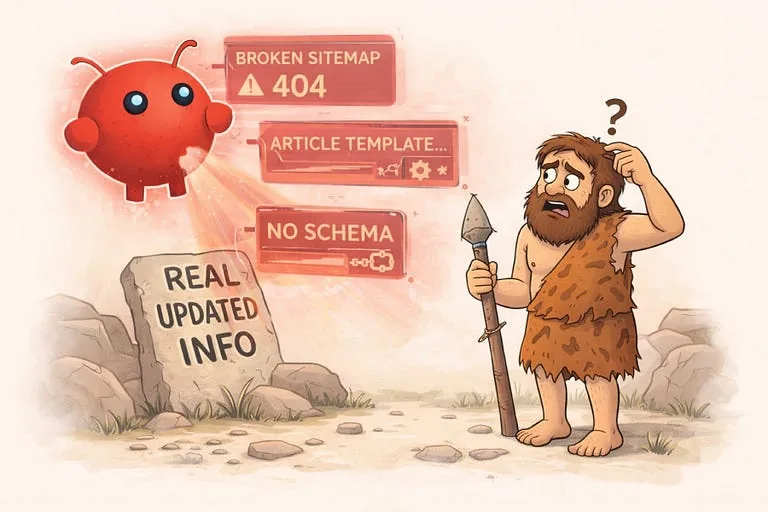
The audit found two live articles still broadcasting placeholder titles to every crawler on the internet.
Read article →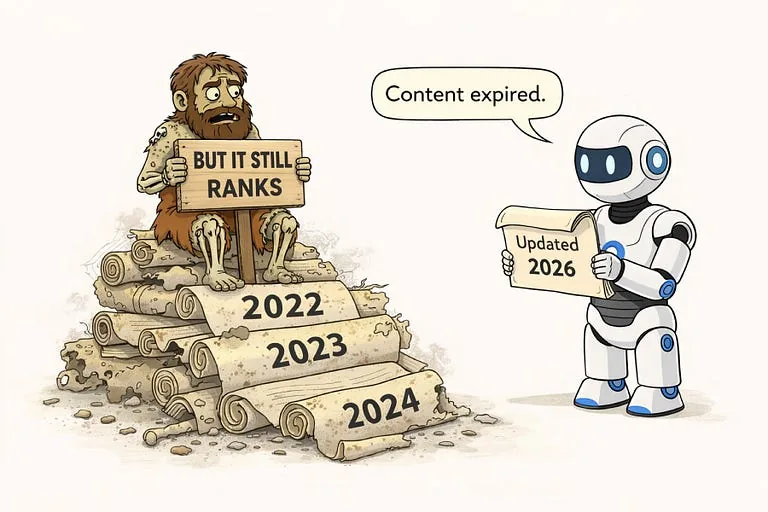
LLM citation decay can make AI mentions fade after publication. Learn why citations change, what to monitor and how to keep useful evidence current.
Read article →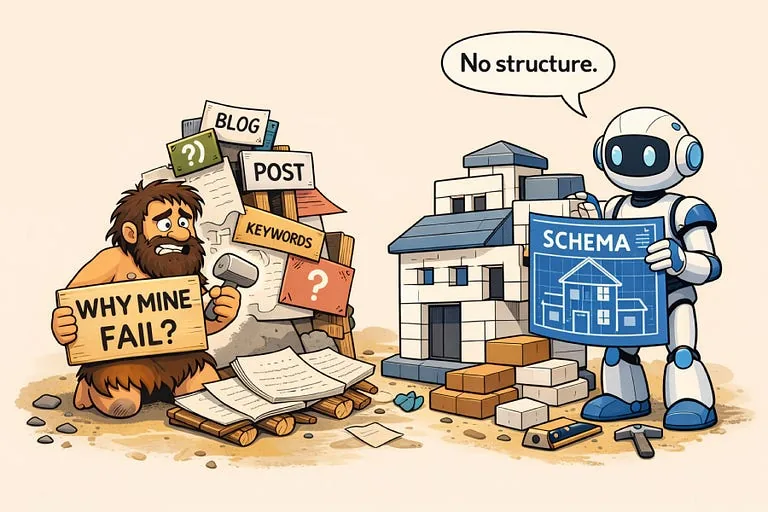
Check existing schema, choose accurate markup and verify one change without promising AI citations. A corrected beginner guide for website owners.
Read article →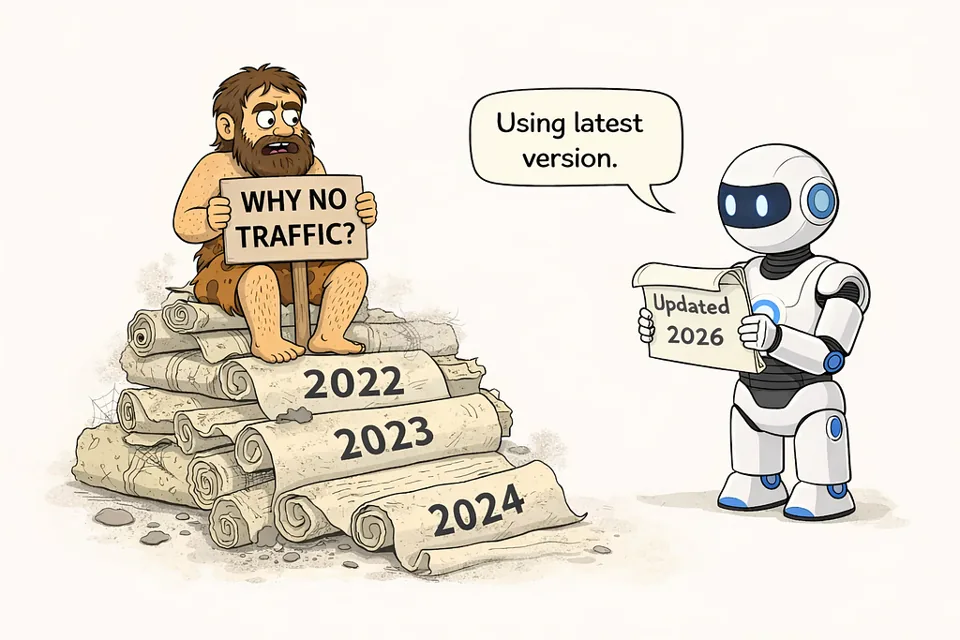
Most creators already have enough content. The issue is that most of it has aged out of the AI citation window without anyone noticing.
Read article →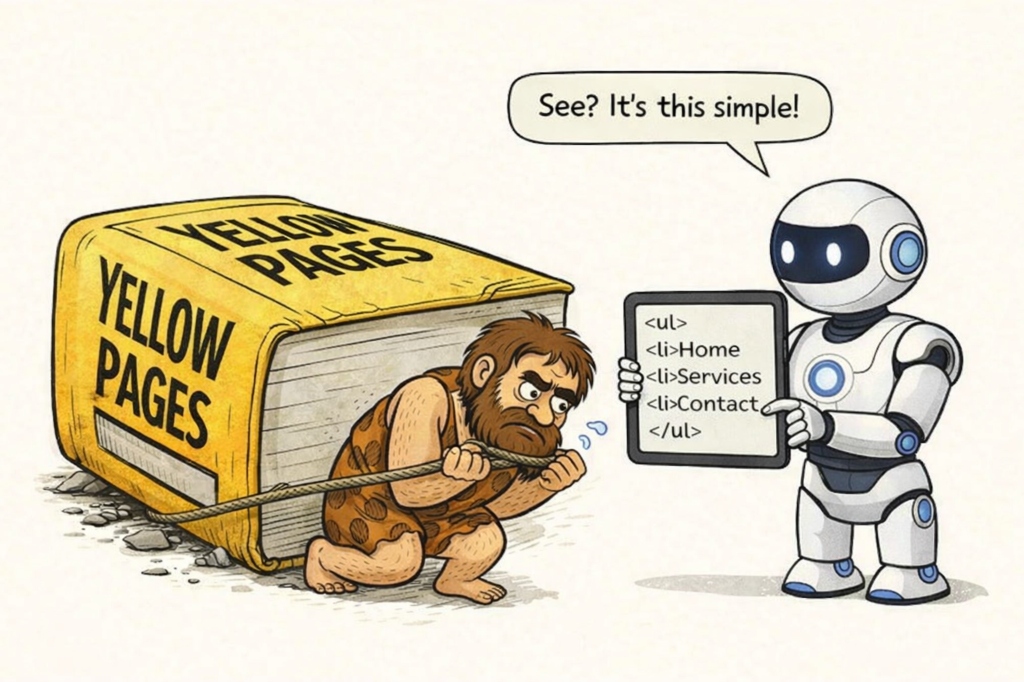
A directory page isn't just an HTML sitemap—it's a Semantic Crawl Hub for ChatGPT, Perplexity, and Gemini. Learn how to build it properly.
Read article →
Schema.org, blog engine, and LLMs.txt sound technical, but they all point to the same issue: machines need help understanding your website.
Read article →
If you run a business, create content, or sell expertise online, your About pages are doing far more work than most people realise. Here is how to build one properly.
Read article →
When enough websites, emails, and blogs use the same AI-generated structures, readers start pattern-matching before they’re even conscious of it. Here is how to cut through the noise.
Read article →
Search still matters. Learn how clear website structure, useful content and technical SEO also support visibility and citations in AI systems.
Read article →Put it into practice
Need help applying this to your own website? We can audit it, talk it through or build what’s missing.
Talk to the studio